Famous Freemasons Through Time

 Masonic 001

Listed here are some of the most famous Freemasons.
 

Monarchs

King George IV (1762–1830)

King William IV (1765–1837)

King Edward VII (1841–1910)

King Edward VIII (1894–1972)

King George VI (1895–1952)


Statesmen

Edmund Burke (1729–1797)

George Canning (1770–1827)

Lord Randolph Churchill (1849–1895)

Sir Winston Churchill (1874–1965)

Leopold S Amery (1873–1955)


Religion

Geoffrey Fisher Archbishop of Canterbury (1887–1972)

Sir Israel Brodie (1895–1979)


Scientists

Sir Joseph Banks (1744–1820)

Dr Edward Jenner (1749–1823)

Sir Alexander Flemming (1881–1955)

Sir Bernard Spilsbury (1877–1947)


Explorers

Sir Richard Burton (1821–1890)

Captain Robert Falcon Scott RN (1868–1912)

Sir Ernest Shackleton (1874–1922)


Charity

Dr TJ Barnardo (1717–1779)

1st Viscount Leverhulme (1851–1925)

Sir William ‘Billy’ Butlin (1899–1980)


Actors

David Garrick (1717–1779)

Edmund Kean (1787–1833)

Sir Henry Irving (1838–1905)

Sir Donald Wolfitt (1902–1968)

Peter Sellers (1925–1980)

Ernest Borgnine (1917–2012)


Writers

Alexander Pope (1688–1744)

Edward Gibbon (1734–1794)

Richard Brinsley Sheridan (1751–1816)

Robbie Burns (1759–1796)

Sir Walter Scott (1771–1832)

Anthony Trollope (1815–1882)

Sir William Schwenck Gilbert (1836–1911)

Sir Arthur Conan Doyle (1859–1930)

Rudyard Kipling (1865–1936)


Artists

Sir James Thornhill (1676–1734)

William Hogarth (1697–1764)

John Zoffany (1733–1810)

Sir John Soane (1753–1837)


Music

Thomas Arne (1710–1778)

Samuel Wesley (1766–1837)

Sir Henry Bishop (1786–1855)

Sir Arthur Sullivan (1842–1900)


Entertainers

Sir Harry Launder

David Nixon

Cyril Fletcher

Nat Jackley

Alfred Marks

Jim Davidson

Edmundo Ross

Cyril Stapleton

Tommy Trinder

Jimmy Wheeler

Charlie Cairoli

Roger de Courcey


Sportsmen

Harold Abrahams

Jackie Milburn

Sir Donald Campbell

Malcolm Campbell

Sir Leonard Hutton

Jock Stein

Sir Alec Rose

Sir Clive Lloyd

Jim Peters

Sir Arthur Gold

Trevor Simpson

Len Shackleton

Joe Wade

Leslie Compton

Herbert Sutcliffe

Bill Bowes

Sir Thomas Lipton

Jack Dempsey

Arnold Palmer

Tony Allcock

Peter Ebdon

Mark Wildman

‘Smokin Joe’ Frazier


Royal Navy

Admiral Sir Sidney Smith (1764–1840)

Admiral Lord Charles Beresford (1841–1919)

Admiral of the Fleet The Earl Jellicoe (1895–1935)


Army

General Sir John Moore (1761–1809)

Field Marshall The Duke of Wellington (1769–1852)

Field Marshall The Earl Roberts of Kandahar VC (1832–1914)

Field Marshall The Earl Kitcher of Khartoum (1850–1916)

Field Marshall Sir John French 1st Earl of Ypres (1852–1925)

Field Marshall The Earl Haigh (1861–1928)

General Reginald Wingate (1861–1953)

Field Marshall The Viscount Wolseley (1883–1913)

Field Marshall Sir Claude Auchinleck (1884–1981)

Field Marshall The Earl Alexander of Tunis (1891–1969)

Lieutenant Colonel ‘Paddy’ Maine DSO (1915–1955)


Royal Air Force

Marshall of the Royal Air Force The Lord Newall (1886–1963)

Squadron Leader Henry Melvin ‘Dinghy’ Young DFC and Bar (1915–1943)
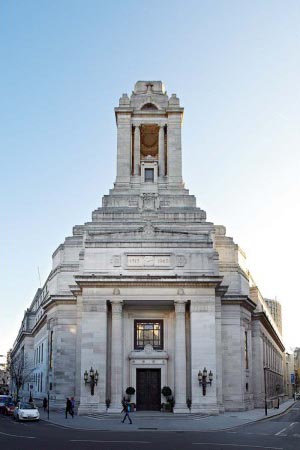
Freemasons_Hall


The development of Freemasonry

sandc-web

The Development of Freemasonry in general

Middle Ages
The questions of when, how, why and where Freemasonry originated are still the subject of intense speculation.
The general consensus amongst Masonic scholars is that it descends directly or indirectly from the organisation of operative stone masons who built the great cathedrals and castles of the middle ages.

1646
A site is acquired in Great Queen Street, London, consisting of a tavern house fronting the street with a garden behind leading to a second house. Thomas Sandby, RA, wins the architect’s competition for the Hall. His Grand Hall is built over the garden, linking the two houses.

1660
From the 1660s more evidence exists of gentlemen being made Masons in non-operative Lodges.

1717
On 24 June 1717 four London Lodges, which had existed for some time, came together at the Goose and Gridiron Tavern in St Paul’s Churchyard, declared themselves a Grand Lodge and elected Anthony Sayer as their Grand Master. This was the first Grand Lodge in the world.

1723
By this time the new Grand Lodge had published its first rule book – The Book of Constitutions of Masonry – and was meeting quarterly and recording its meetings. It had extended its authority outside London.

1725
The Grand Lodge of Ireland was established.

1736
The Grand Lodge of Scotland was established.
The three Home Grand Lodges began to take Freemasonry overseas and the development of Freemasonry abroad mirrors the 18th and 19th century development of the British Empire.

1751
A rival Grand Lodge appeared in London. Its original members were Irish Masons who claimed that the original Grand Lodge had made innovations.
They dubbed the first Grand Lodge the Moderns and called themselves the Antients.
The two existed side by side – both at home and abroad – for nearly 63 years, neither recognising each other as regular.

1813
After four years of negotiation, the two Grand Lodges in England united on 27 December 1813 to form the United Grand Lodge of England.
This union led to a great deal of standardisation of ritual, procedures and regalia.

1814
Some 647 Lodges were in existence. The 19th century saw a great expansion of Freemasonry – both at home and abroad.

1900
2,800 Lodges had been established despite losses when independent Grand Lodges were formed in Canada and Australia in the later part of the century.

WORLD WARS
The two World Wars both had a great effect on English Freemasonry.
In the three years after the First World War over 350 new Lodges were set up, and in the three years after the Second World War nearly 600 new Lodges came into being.
In many cases the founders were servicemen who wanted to continue the camaraderie they had built up during their war service, and were looking for a calm centre in a greatly changed and changing world.

1967
On 14 June 1967 the 250th anniversary of Grand Lodge was celebrated at the Royal Albert Hall. Centrepiece of the celebrations was the installation as Grand Master of HRH The Duke of Kent, who still holds that office today.

1992
On 10 June 1992 over 12,500 Freemasons and guests gathered at Earls Court in West London to celebrate the 275th anniversary of Grand Lodge.
For the first time press and television were present at a meeting of Grand Lodge and the event featured on television newscasts around the world.

2017
Freemasons celebrated the tercentenary of Grand Lodge in June 2017.

s_c_hendry02


What is Freemasonry?

What is Freemasonry?

Freemasonry teaches moral lessons and self-knowledge through participation in a progression of allegorical two-part plays, which are learnt by heart and performed at Lodge meetings.

Freemasonry offers its members an approach to life which seeks to reinforce thoughtfulness for others, kindness in the community, honesty and integrity, courtesy in society and fairness in all things.

Freemasons are urged to regard the interests of the family as paramount but importantly Freemasonry also teaches and practices concern for other people and care for the less fortunate and help for those in need.


Why do people join the Freemasons?

Why do people join the Freemasons?

People become Freemasons for a variety of personal reasons, some as the result of family tradition already having a brother of father in the lodge, others upon the introduction of a friend and for some the curiosity to know what Freemasonry is all about.

Those who become active members and who grow in Freemasonry do so principally because they enjoy it. They enjoy the challenges, social activities, sports and fellowship that Freemasonry offers. There is more to it, however, than just enjoyment.

Participation in the dramatic presentation of moral lessons and in the working of a Lodge provides a member with the opportunity to learn more about himself and encourages him to live in such a way that he will always be in search of becoming a better man, not better than someone else but better than he himself would otherwise be and therefore an exemplary member of society.

Each Freemason is required to learn and show humility through initiation. Progression is made through a series of degrees he gains insight into increasingly complex moral and philosophical concepts, and accepts a variety of challenges and responsibilities which are both stimulating and rewarding.

The structure and working of the lodge and the sequence of ceremonial events, which are usually followed by social gatherings, offer members a framework for companionship, teamwork, character development and enjoyment of shared experiences.


How much does it cost to become a Freemason?

How much does it cost to become a Freemason?

Contrary to any popular belief Freemasonry is not reserved for those of affluent background but is accessible by all men. Fees vary from lodge to lodge.

Typical fees will include annual subscriptions, dining fees, charity donations and spends for refreshments.


What Promises does a Freemason take?

What promises does a Freemason take?

New members make solemn promises concerning their conduct in the Lodge and society. These promises are similar to those taken in court or upon entering the Armed Services or many other organizations. Each member also promises to keep confidential the traditional methods of proving he is a Freemason which he would use when visiting a Lodge where he is not known.

The much publicised ‘traditional penalties’ for failure to observe these undertakings were removed from the promises in 1986. They were always symbolic, not literal, and refer only to the pain any decent man should feel at the thought of violating his word.

Lodge members are strictly prohibited from making use of their membership for personal gain or advancement; failure to observe this principle or to otherwise fall below the standards expected of a Freemason can lead to expulsion.